
-2.png?width=450&height=450&name=Round%20Blog%20Thumbnail%20(12)-2.png)
CallRail has announced the sunset of Lead Center. Most official guidance frames this as a telephony change: migrate phone numbers, keep call tracking intact, and make sure calls still reach sales teams.
That framing understates the impact for HubSpot teams. Lead Center was not just a dialer. It shaped how calls entered HubSpot, how ownership and timing were determined, and how sales activity aligned with marketing attribution.
When Lead Center disappears, calls still happen. What changes is how data flows, how context is preserved, and where decisions are made. These issues rarely appear during migration. They surface later in HubSpot as reporting inconsistencies, automation drift, and declining confidence in sales data.
If HubSpot is your system of record, this change requires system-level planning, not just a replacement phone tool.
What Lead Center Was Designed to Do Beyond Phone Calls
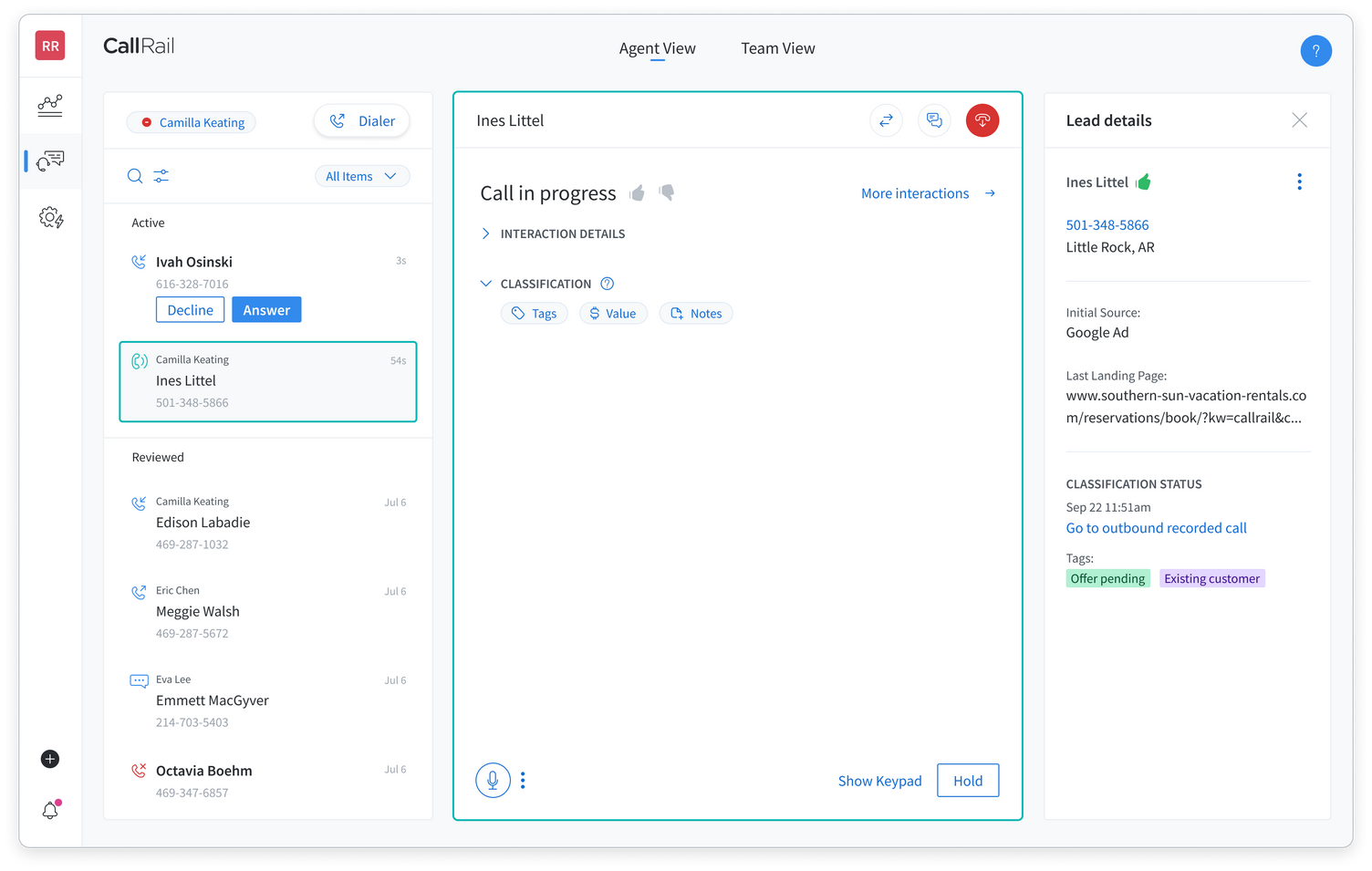
Lead Center is often described as CallRail’s built-in phone system. That description is technically accurate, but incomplete. In practice, Lead Center combined three functions into a single operational layer.
- It acted as a virtual phone environment. Sales reps could answer inbound calls, place outbound calls, and manage calling activity without leaving CallRail. Phone numbers remained tied to attribution data across sources, campaigns, and channels.
- It introduced agent availability awareness. Reps logged in and out, and CallRail knew who was actually available. Routing decisions reflected real-time human state rather than static forwarding rules.
- It provided lightweight call handling and distribution logic. Calls could ring multiple agents, follow simple routing rules, and adjust dynamically based on who was online.
This mattered because the Lead Center sat between attribution and sales activity. CallRail handled the marketing side. Lead Center translated that information into a sales-ready event. Calls entered HubSpot with ownership, timing, and context already shaped.
One point deserves clarity. Lead Center was not a CRM. It did not manage contacts, deals, or pipelines, nor did it replace HubSpot. However, it strongly influenced how calls were logged, associated, and interpreted in HubSpot.
Removing Lead Center does not erase data. It changes the route data takes and the assumptions HubSpot can safely make about it.
What Disappears When Lead Center Is Sunset
When Lead Center is sunset, the coordination layer that quietly aligned calling operations is removed. The effects show up across routing, visibility, and data coherence.
Loss of Availability-Based Routing
Agent state is no longer part of CallRail. The system cannot distinguish between available and unavailable reps, so routing relies on static forwarding rules. Phones ring without awareness of real availability, increasing missed calls and uneven distribution.
Loss of a Unified Calling Environment
The shared calling workspace disappears. Internal dialing and call handling move to separate phone platforms, removing a single operational surface where reps manage calling activity.
Call Data Fragmentation Across Systems
Call data splits at the start of the interaction. CallRail continues to capture attribution and recording metadata. The phone platform controls ringing, answering, transfers, and outcomes. HubSpot receives activity downstream and attempts to reconcile inputs that no longer originate from a shared operational layer.
Loss of End-to-End Call Ownership
No single system owns the full lifecycle of a call. Each platform holds only partial context, making it harder to understand what actually happened in a specific interaction.
Calling continues, but the structure that once made it coherent is gone.
The HubSpot Impact Most Teams Don’t See Coming
The real cost of the Lead Center sunset does not appear during number migration or call setup. It appears later, once daily activity resumes, and HubSpot has absorbed the change.
Activity Timelines Lose Context
Calls are still logged to HubSpot, which can create the impression that little has changed. The issue is not missing activity, but missing clarity.
Ownership may default to system users instead of the rep who handled the call. Associations rely more on matching rules than live agent context. Outcomes reflect what the phone system recorded, not the full interaction.
Over time, timelines begin to feel thinner. A contact shows a call occurred, but it doesn't indicate why it was routed to that rep. A deal shows activity without revealing the logic that influenced it. The sequence exists, but the reasoning behind it is absent.
Sales managers often notice this first. Coaching becomes harder when the underlying story behind each call is no longer visible.
Workflows and Automation Drift Quietly
Many HubSpot portals use calls as operational triggers. Calls create tasks, move lifecycle stages, update lead status, and influence scoring and attribution.
When call handling moves outside Lead Center, those assumptions weaken. Some calls are logged later than expected. Others arrive without the properties on which workflows depend. Conditions that once worked reliably begin to fail silently.
Automation continues to run, but accuracy declines. Manual updates increase. Ops teams add exceptions. Over time, process debt accumulates without a clear point at which the trade-off was intentionally made.
Reporting Degrades Over Time
Reporting issues surfaces last and is the hardest to unwind. Call volume still appears in dashboards. Sales activity still populates reports. The issue is alignment, not absence.
Agent-level insights become harder to trust. Attribution and conversion metrics diverge. Historical comparisons lose reliability when call-handling mechanics change midstream, even though reports look structurally unchanged.
Months later, HubSpot feels less consistent because the inputs feeding it have changed.
The Real Risk for HubSpot Teams
The Lead Center sunset changes how systems coordinate and where authority lives. The consequences emerge gradually across operations.
Authority Drift Inside HubSpot
HubSpot works best when recorded activity reflects how work actually happens. Ownership, sequencing, automation, and forecasting depend on that alignment.
When call handling occurs outside the CRM, that assumption weakens. Control shifts away from HubSpot’s data model.
Loss of Explicit Ownership and Timing
Call ownership moves from a clear assignment to inferred logic. Timing becomes less precise as activity logs are taken after the fact rather than at the moment of action.
Outcomes are flattened into summaries rather than context-rich events.
Declining Confidence in Reporting and Forecasting
Managers begin to question reports that no longer match lived experience. Forecasts feel less dependable. Metrics require explanation instead of enabling decisions.
Rising Operational Overhead
RevOps teams spend more time reconciling inconsistencies and less time improving systems. Manual fixes and exceptions become normal. Each workaround adds friction and ongoing maintenance.
Quiet System Degradation Over Time
The impact rarely arrives as a failure. Small inconsistencies accumulate. Processes adapt to gaps rather than resolving them. HubSpot becomes harder to trust, not because it failed, but because it no longer sits at the center of operational flow.
This is the cost of treating the Lead Center sunset as a phone change instead of a systems change. Planning only for call delivery protects short-term continuity. Planning for CRM authority protects long-term clarity, forecasting, and confidence.
Where Calling Belongs in a HubSpot-First Stack

Some HubSpot-first teams respond to the Lead Center sunset by reframing the decision entirely. The question shifts from what replaces Lead Center to where call logic should live when HubSpot is the system of record. That shift naturally points toward CRM-native or CRM-first calling platforms.
In this model, call ownership, timing, outcomes, and associations originate within HubSpot workflows rather than being imported after the interaction. HubSpot is no longer a passive receiver of activity. It becomes the place where calling behavior is defined and enforced.
Aircall often enters the conversation at this stage. For teams where calls trigger automation, move lifecycle stages, and directly influence reporting and forecasting, alignment with HubSpot’s data model matters more than maintaining full telephony independence.
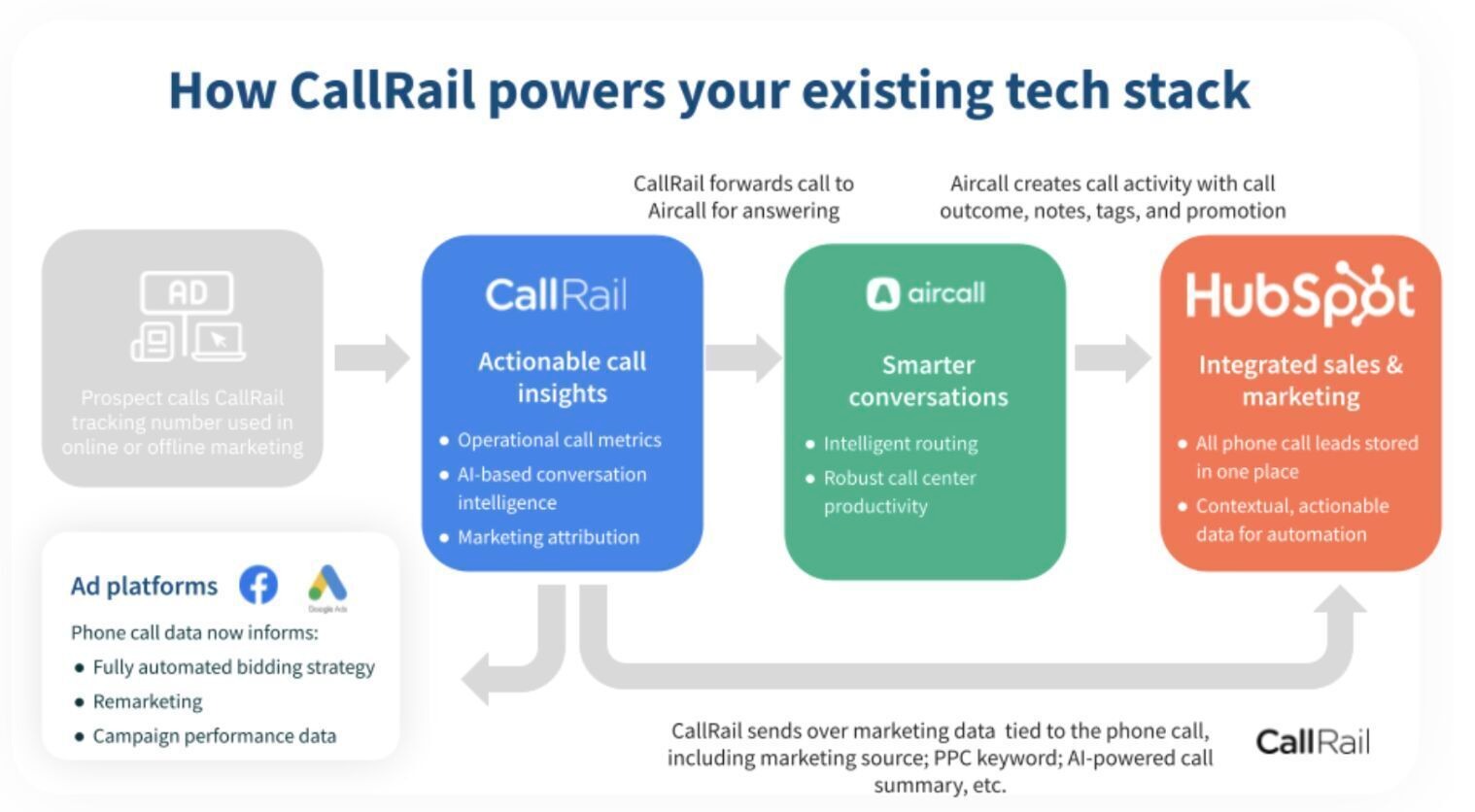
This trade-off is situational. It reflects how central HubSpot is to revenue operations rather than a universal best practice.
Once Lead Center is gone, every team has to make this choice. Calling can live alongside HubSpot or inside it. That decision quietly determines how clean data remains, how automation behaves, and how much trust teams place in downstream reporting.
Plan the HubSpot Impact Before You Migrate the Phones!
The Lead Center sunset is a forcing function. It pushes HubSpot teams to confront something that is usually left implicit: how calls move through their systems and which platform is responsible for that story.
Seen as a tool decision, this appears to be a phone issue. When viewed as a system decision, it becomes a question of data flow, ownership, and workflow integrity within HubSpot.
Planning the CRM impact first prevents the slow erosion that follows unexamined change. It preserves call context, keeps automation dependable, and maintains confidence in reporting long after the phones have been migrated.
Next, HubSpot teams need to evaluate their calling options and understand how each affects CRM workflows and data.
We partner with Aircall to help HubSpot teams design calling systems that actually fit their CRM. Before you migrate the phones, work with experts who plan the data, workflows, and reporting impact from day one.










.png?width=90&height=90&name=Arrows%20Partner%20Badge-test%20(1).png)