

Customer feedback is a gift, even when it stings. A frustrated customer reaching out is giving you something valuable: a chance to fix the problem, save the relationship, and learn what's broken in your business. But here's the catch: most companies don't act on it.
When you ignore feedback or respond poorly, you're not just losing one customer. You're missing a chance to improve your operations, strengthen loyalty, and prevent the same issue from happening again.
This guide will walk you through how to respond to customer feedback, especially negative feedback, in a way that turns complaints into opportunities and builds a system that scales as you grow.
Why Closing the Feedback Loop Matters

Closing the loop means following up with customers who provide feedback, acknowledging their input, and taking action. It's the difference between collecting data and actually using it to improve.
Here's why you need it:
1. Negative feedback spreads faster than positive feedback.
Research shows that 65% of customers who have a bad experience tell others about it, compared to just 25% who share positive experiences. One unresolved complaint can ripple outward, damaging your reputation far beyond that single interaction.
2. Quick resolution can actually increase loyalty.
Studies have found that about one-third of customers who had a problem resolved quickly became more loyal to the company than they were before the issue occurred.
This is known as the service recovery paradox: handle a complaint well, and you can turn a detractor into a promoter.
3. Customers expect a response, and they expect it fast.
Customers expect a response, and they expect it fast. Over 70% of customers now expect a reply within 24 hours of submitting feedback. If you don't respond quickly, customers assume you don't care. Speed matters.
Many customers say that a delayed response feels worse than no response at all. The longer you wait, the more likely they are to share their frustration publicly or simply take their business elsewhere.
4. Ignoring feedback costs you money.
Poor data quality and missed feedback cost businesses an average of nearly $13 million annually.
When you don't close the loop, you're not just losing individual customers. You're losing the insights that could prevent future churn and drive smarter decisions across your entire organization.
Best Practices for Responding to Negative Feedback (Tone, Ownership, Channels)
When a customer leaves negative feedback, your response can either defuse the situation or make it worse. Here's how to get it right:
1. Maintain an Empathetic, Professional Tone

Never get defensive. Even if the customer is wrong or exaggerating, your job is to acknowledge their feelings and take the conversation in a constructive direction.
Start by thanking them for speaking up. Then apologize sincerely for their poor experience. Avoid canned or robotic language. Customers can tell when you're reading from a script, and it makes things worse.
For example: "Thank you for taking the time to share this with us. I'm really sorry you had this experience. It's not the standard we hold ourselves to, and I want to make this right."
This kind of response feels human. It validates the customer's frustration without making excuses. Be transparent about what went wrong and what you're doing to fix it. Honesty builds trust, especially in tough situations.
2. Take Ownership and Assign Clear Accountability
Even if the problem wasn't directly your team's fault, take responsibility on behalf of the company. Customers don't care about internal silos. They just want someone to own the issue and fix it.
Internally, ensure that someone specific is responsible for each piece of feedback. Ambiguity leads to inaction. If a customer complains about a billing error, the finance team should be notified immediately and assigned to resolve it. If it's a product bug, route it to the product team.
Introduce yourself in your response and make it clear that you'll personally see the issue through:
"My name is Sarah, and I'm the customer service manager here. I'm going to look into this right away and get back to you by the end of the day with a solution."
This personal accountability reassures the customer that they're not being ignored or passed around.
3. Choose the Right Channel for Your Response
Respond on the same channel the customer used, unless privacy or complexity requires moving to a private conversation.
For example, if someone leaves a public complaint on social media, reply publicly first to show you're responsive: "We're sorry to hear this. We'd like to help. Please check your DMs so we can discuss this further."
Then move the conversation to a direct message or phone call to resolve the details privately.
Consider the customer's preferences. Some customers want a phone call for a personal touch. Others, especially younger customers, may prefer email or chat. When possible, let them choose.
For urgent or sensitive complaints, a phone call from a senior team member can make a big difference. But for minor issues, a thoughtful email might be all that's needed.
Internal Feedback Routing: Who Sees What, and How Fast

Responding to feedback quickly and effectively requires the right internal systems in place. If feedback gets lost or no one knows who's supposed to handle it, your loop stays open and your customer stays frustrated.
Here’s how you can do it:
Establish Clear Responsibility and Alerts
Every piece of feedback should have an owner. Set up automated alerts so that when a customer submits a complaint or rates you poorly, the right person is notified immediately.
For example:
- Billing complaints go to the finance team.
- Product bugs go to the product team.
- Shipping delays affect operations.
No one should be wondering, "Is someone else handling this?" Use a ticketing system or CRM to assign feedback automatically based on keywords, topics, or survey scores.
Respond with Speed (Set Internal SLAs)
Customers expect a response within 24 hours. Internally, that means your team should be alerted within minutes and begin working on a resolution within a few hours.
Set internal service-level agreements (SLAs) for follow-ups. For example:
- Critical complaints (safety issues, high-value accounts, public complaints) should be addressed within 2 to 4 hours.
- Standard complaints should be acknowledged within 24 hours and resolved within 48 to 72 hours.
Prioritize by urgency. Use text analytics or sentiment scoring to flag high-severity feedback so it gets escalated immediately. Some companies form rapid-response teams to review critical feedback daily. The faster you act, the less likely a small issue become a big problem.
Centralize vs. Decentralize (and Break Down Silos)
Decide whether feedback response will be centralized (one team handles everything) or decentralized (each department handles its own feedback).
Centralized responses ensure consistency, but decentralized responses often yield better results because the people closest to the issue can resolve it faster and learn from it directly.
For example, if a hotel guest complains about a dirty room, it's better for the housekeeping manager to respond than for a corporate office.
Whichever model you choose, ensure that feedback is shared across all teams. If a product issue is reported repeatedly, the product team needs to see that trend.
Breaking down data silos ensures that insights reach the right people and systemic problems get fixed, not just individual cases.
Empower Frontline Employees
Once feedback reaches an employee, they need the authority to resolve it. Train your team and give them the tools or discretion to fix problems on the spot, whether that's issuing a refund, offering a replacement, or scheduling a follow-up.
Saying "I'll pass your feedback along" is not enough. Customers want action, not reassurance that someone else will eventually see their complaint.
Turning Negative Feedback into Positive Outcomes
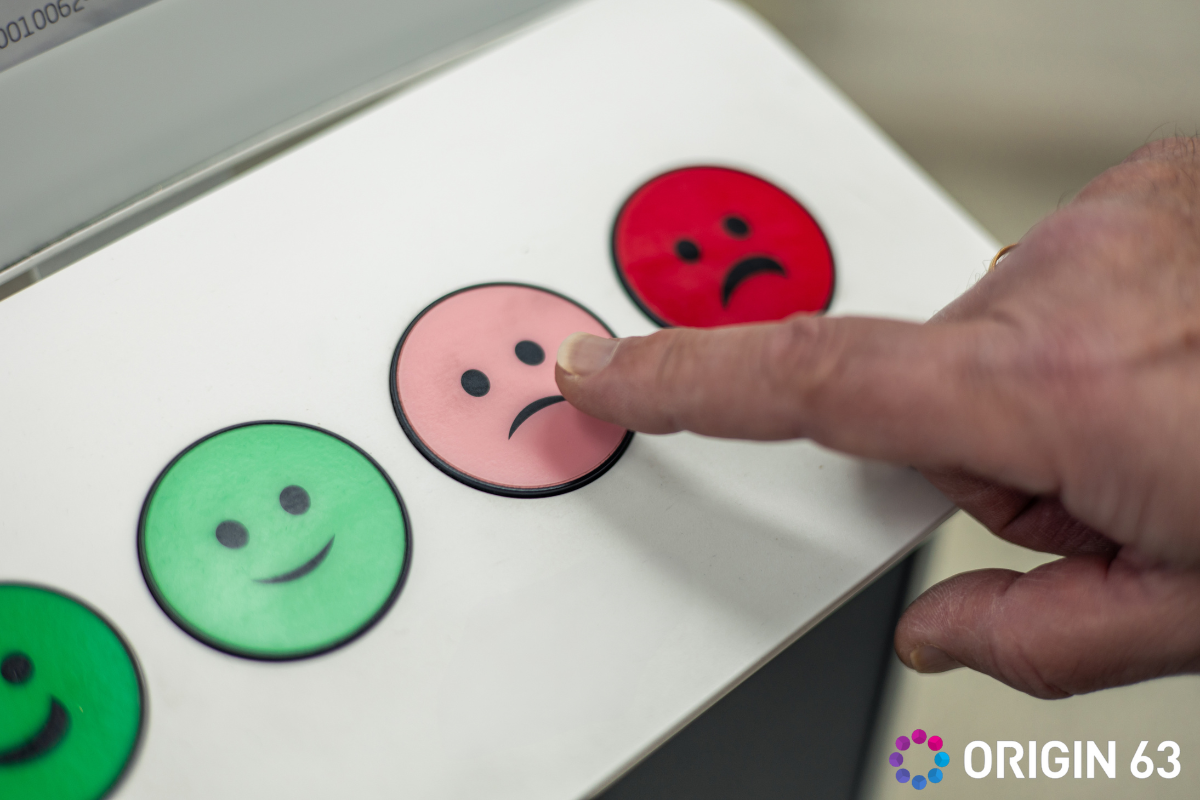
Negative feedback doesn't have to be a loss. When handled well, it can actually strengthen customer loyalty and improve your business.
Act Quickly and Solve the Problem Completely
Speed and effectiveness are critical. Research shows that about a third of customers who had a complaint resolved quickly became more loyal than they were before the issue. A fast, thorough fix demonstrates that you value the customer and take their concerns seriously.
Imagine a customer orders a product online and receives the wrong item. A mediocre response might be:
"We're sorry for the mix-up. We'll send the correct item in 3 to 5 business days."
A great response would be:
"I'm so sorry. That's completely our mistake. I've already shipped the correct item with expedited delivery, and you should have it by tomorrow. No need to return the wrong item. Keep it or donate it. I've also added a 20% discount to your next order as an apology."
The second response not only fixes the problem but exceeds expectations. The customer goes from frustrated to impressed.
Go the Extra Mile
Simply fixing the issue satisfies the customer. Delighting them wins loyalty.
When appropriate, add a gesture of goodwill: a discount, a free upgrade, a handwritten note, or a small gift. For example, if a hotel guest complains about noise, don't just move them to a quieter room. Offer a complimentary late checkout or a free meal.
These gestures create positive word-of-mouth. Customers remember when a company went above and beyond to make things right.
Follow Up and Show the Impact
If a customer's feedback leads to a real change, let them know:
"Thanks to what you told us, we've updated our packaging process so this won't happen again. We really appreciate you bringing it to our attention."
This not only reassures the customer but also shows that their voice matters. It encourages them to keep providing feedback because they can see it has an effect.
Use Feedback to Prevent Future Issues
Solving one customer's problem is good. Using that insight to prevent the same problem for others is even better. If multiple customers mention the same issue, treat it as a signal to fix the root cause.
A well-handled complaint can spark broader improvements that benefit your entire customer base.
Analyzing Patterns in Feedback to Prevent Future Issues

Responding to individual feedback is reactive. Analyzing trends is proactive. The most effective companies do both. Here are some things you can do:
1. Look for Patterns
If five customers in one month complain about slow shipping, that's not a coincidence. It's a trend. If ten customers mention confusing checkout pages, that's a design problem.
Use text analytics and feedback dashboards to categorize comments and identify recurring themes. Modern tools can automatically flag common topics, sentiment scores, and frequency of issues.
2. Hold Regular Cross-Functional Reviews
Schedule monthly or quarterly meetings to review aggregated feedback data with leaders from product, operations, marketing, and customer service. Ask:
- What are the top drivers of negative feedback this quarter?
- What underlying issues are causing these complaints?
- What changes can we make to eliminate them?
This ensures that insights don't stay siloed. If a systemic issue is identified, assign ownership and track progress on fixing it.
3. Measure the Impact of Improvements
After you make a change, measure whether it actually solves the problem. Track repeat complaints, customer satisfaction scores, and churn rates related to specific issues. If a fix isn't working, adjust your approach.
For example, if you update your return policy based on feedback but complaints continue, dig deeper to understand what's still not working.
4. Close the Outer Loop
Researchers distinguish between the "inner loop" (responding to individual customers) and the "outer loop" (using feedback to drive systemic improvements).
Both are essential. If you only focus on individual responses, you'll keep putting out the same fires over and over. Closing the outer loop means learning from feedback and evolving your business to prevent future issues.
Making It Scalable: Systems and Workflows to Automate the Feedback Loop
As your business grows, you can't manually track every piece of feedback. You need scalable systems that ensure nothing falls through the cracks.
Deploy a Customer Feedback Management (CFM) Platform

Use a dedicated tool to collect, organize, and route feedback. These platforms can:
- Gather input from surveys, emails, chat, social media, and reviews in one place.
- Use AI and text analytics to categorize and prioritize feedback automatically.
- Trigger workflows and alerts so the right person is notified instantly.
Many CRM systems also offer feedback management features, including ticketing and workflow automation. The goal is to move away from ad-hoc processes and toward a reliable, tech-enabled system.
Use Ticketing, Alerts, and Workflows
Create a ticket for every piece of feedback. Assign it to a specific person or team, set a due date, and track it through resolution.
Set up automated alerts so that when a low survey score or negative comment comes in, someone is notified immediately. Add escalation rules: if a ticket isn't addressed within 24 hours, escalate it to a manager.
These workflows create accountability and make it easy to measure performance (average response time, closure rates, etc.).
Leverage Automation (But Keep It Human)
Automation can help you scale, but don't let it replace genuine engagement.
Use automation for:
- Instant acknowledgment messages: "We received your feedback and are looking into it."
- Routing and triage: Automatically assign feedback to the right team based on keywords or topics.
- Simple FAQs: Chatbots can answer basic questions instantly.
But when it comes to meaningful complaints, involve a human. Customers can tell when they're talking to a bot, and it frustrates them. Use automation to handle the grunt work, but ensure that real issues get a personal, thoughtful response.
Standardize Response Playbooks
Create response guidelines for common situations. For example:
- Tone: Always thank and apologize. Never argue.
- Resolution options: What discounts, refunds, or upgrades can be offered at different levels of severity?
- Escalation paths: When should a manager or executive get involved?
Standardized playbooks ensure consistency and speed, but always allow room for personalization. Customers should feel like they're talking to a person, not reading from a script.
Invest in Training and Culture
Technology alone won't scale your feedback loop. Your team needs to understand why it matters and how to use the tools effectively.
Train employees on:
- How to respond empathetically and professionally.
- How to use your ticketing or CRM system.
- How to interpret analytics and act on trends.
Make feedback response part of your company culture. Celebrate wins (like a customer who changed their review after a great recovery experience) and share insights across the organization.
When everyone understands the value of closing the loop, they'll prioritize it even as volumes grow.
Turn Customer Feedback Into Lasting Loyalty
Responding to customer feedback, especially negative feedback, is one of the most powerful things you can do for your business. It saves at-risk customers, strengthens loyalty, protects your reputation, and uncovers insights that drive continuous improvement.
But to do it well, you need more than good intentions. You need speed, empathy, clear accountability, scalable systems, and pattern analysis that fixes root causes instead of just individual complaints.
The companies that listen, respond, and act on feedback are the ones that earn long-term customer loyalty and sustainable growth. Every complaint is a chance to improve, and every response is a chance to show your customers you're listening.
Streamline Customer Service with Origin 63
Building a feedback system that scales takes the right tools and strategy. At Origin 63, we help businesses set up CRM workflows, ticketing systems, and automation that make it easy to capture, route, and act on customer feedback in real time.
Whether you're managing feedback manually or looking to optimize your current process, our team can help you design a system that keeps customers happy and drives continuous improvement.
Ready to close the loop faster and smarter? Talk to Origin 63 today and start turning customer feedback into growth.











.png?width=90&height=90&name=Arrows%20Partner%20Badge-test%20(1).png)